

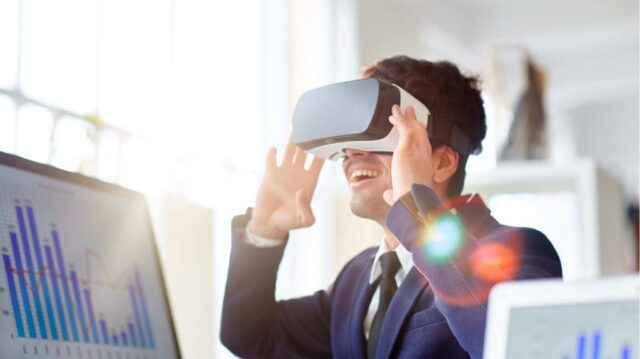
Leveraging virtual reality for B2B sales demos in an immersive environment is a game-changer. Traditional sales pitches can be dull and static, but virtual reality solutions bring products to life. Imagine showcasing your product in an immersive, interactive environment. Your clients can explore features like never before. This tech not only grabs attention but also boosts engagement and retention through virtual reality solutions in entertainment and gaming.
Businesses are switching to VR for its dynamic presentations. It’s not just about showing; it’s about experiencing. The contrast between old-school slideshows and innovative VR demos, including virtual reality solutions and virtual research, is stark. Clients remember VR demo experiences better, making it easier to close deals. Embrace this cutting-edge tool with a demo to stay ahead in the competitive market.
Key Takeaways
-
Embrace VR for B2B Sales: Incorporate virtual reality to create immersive, interactive sales demos that can differentiate your offerings.
-
Reap the Benefits: Utilize VR to demo products in a realistic setting, reducing the need for physical prototypes and travel.
-
Streamline Integration: Seamlessly integrate VR demo into your existing sales processes to enhance efficiency and effectiveness.
-
Tackle Challenges: Address common implementation hurdles such as cost, technical expertise, user adoption, and demo to ensure success.
-
Boost Engagement: Use VR to provide engaging and memorable product demonstrations that capture and retain customer interest.
-
Secure Your Demos: Prioritize security measures to protect sensitive information during virtual presentations.
Embracing Virtual Reality in B2B Sales
Shift to VR
Traditional sales methods are changing. Companies now use virtual reality solutions for product demonstrations. This shift is a competitive necessity. VR allows businesses to showcase products in new ways.
Sales teams can present complex products more effectively. Instead of relying on brochures, they use immersive technology. This makes the sales process more engaging. Clients get a better understanding of the product.
Streamlining Sales Process
VR technology streamlines the sales process. It provides immersive product demonstrations remotely. Clients can explore products without being physically present. This saves time and reduces travel costs.
Sales teams create virtual demo environments that mimic real-world settings. Clients interact with products as if they were there. This leads to quicker decision-making, demo, and higher conversion rates.
Role of Apple Vision Pro
Upcoming technologies like Apple Vision Pro set new standards. They enhance the virtual reality demo experience in B2B sales. Apple Vision Pro offers high-resolution displays, demo features, and advanced sensors.
These features create more immersive experiences. Sales teams can deliver detailed product demonstrations. Clients receive a clearer picture of what’s being offered.
Benefits of VR in Sales
Using VR in sales has many benefits:
-
Cost savings: Reduces travel expenses.
-
Time efficiency: Speeds up the sales cycle.
-
Enhanced engagement: Keeps clients interested.
-
Better understanding: Provides a clear view of products.
These advantages make VR a valuable tool for B2B sales demos.
Real-Life Examples
e companies already use VR successfully. For instance, Boeing uses VR to showcase aircraft interiors. Their clients can walk through planes virtually. This helps them make informed decisions.
Similarly, Siemens uses VR for industrial equipment demos. Clients see how machines work in a virtual environment. This leads to better product comprehension through demo and faster purchase decisions.
Benefits of Virtual Demos
Shortened Sales Cycle
Virtual demos can significantly shorten the sales cycle. They provide immediate, comprehensive product experiences. Clients don’t need to wait for in-person meetings, demo, or physical product shipments. Sales teams can showcase products instantly through VR.
Cost-Effective Solutions
Using virtual reality for demos reduces travel and physical setup expenses. Traditional sales presentations often require traveling to client locations. This incurs costs for flights, hotels, and meals. Portable VR demo kits eliminate these expenses.
Setting up a real life demo can be costly and time-consuming. VR setups are quicker and cheaper. Companies save on shipping bulky products or setting up complex demo displays.
Enhanced Product Understanding
VR allows clients to understand complex product functionalities easily. Seeing a product demo in action through VR is more engaging than traditional methods. Clients can interact with the product demo, exploring features hands-on.
For example, a machinery manufacturer can use VR to demo how their equipment operates. Clients can see the machine’s inner workings without needing a physical model during the demo. This leads to better comprehension and fewer misunderstandings.
Interactive Engagement
Virtual demos offer interactive engagement that traditional methods lack. Clients can navigate through different scenarios and environments in VR demo. This makes the demo more immersive and memorable.
Interactive elements help clients retain information better. They can revisit parts of the demo they found interesting or confusing. Real life demo sessions might not offer this flexibility.
Flexibility and Convenience
VR demos provide flexibility and convenience for both sales teams and clients. Scheduling becomes easier since there’s no need for travel arrangements for the demo. Demos can be conducted at any time, from anywhere.
Clients appreciate the convenience of experiencing a demo of products without leaving their office. It saves them time and effort while still providing valuable demo insights.
Scalability
Virtual reality demos are scalable solutions for businesses of all sizes. Small companies benefit from reduced costs, while large enterprises enjoy streamlined processes. Multiple clients can experience the same demo simultaneously without logistical challenges.
This scalability ensures consistent messaging across different demo regions and markets. Sales teams can deliver uniform presentations regardless of location.
Data Collection
VR demos allow for efficient data collection during presentations. Sales teams can track client interactions within the virtual environment. This data helps understand client preferences and pain points.
Analyzing interaction patterns provides insights into which features interest clients most. Companies can tailor future presentations based on this data, improving overall effectiveness.
Integrating VR into Sales Processes
Seamless Integration
Start by incorporating VR demos into existing sales strategies. First, identify key products or services that will benefit from a virtual reality tour. Then, design the VR content to showcase these offerings effectively.
Next, integrate the VR demos into your sales presentations. Use VR headsets or compatible devices to immerse clients in the experience. Ensure that the VR content aligns with the sales pitch and highlights unique selling points.
Finally, gather feedback from clients after each demo. Use this information to refine and improve future VR presentations.
Training Sales Teams
Training sales teams is crucial for leveraging VR technology. Begin by familiarizing them with the equipment. Teach them how to set up and operate VR headsets and software.
Next, train them on presenting with VR. Demonstrate how to guide clients through the virtual experience. Emphasize the importance of engaging with clients during the demo.
Provide ongoing training sessions to keep the team updated on new features and techniques. This ensures that they remain confident and competent in using VR for sales.
Utilizing VR Analytics
VR analytics offer valuable insights into customer engagement. These tools track how clients interact with the virtual environment.
Analyze data such as time spent on different sections of the demo, areas of interest, and user behavior patterns. Use this information to understand client preferences better.
Adjust your sales strategy based on these insights. Highlight popular features more prominently in future demos. Address any areas where clients seem less engaged.
Overcoming Implementation Challenges
Hardware Costs
Many businesses face high hardware costs when adopting VR for sales. Quality VR headsets and computers can be expensive. Companies may also need to invest in additional equipment like sensors or controllers.
To manage these costs, businesses can:
-
Start with a small-scale pilot program.
-
Lease or rent VR equipment initially.
-
Seek bulk purchase discounts from vendors.
These steps help reduce initial expenses and allow testing before full investment.
Learning Curves
Adopting VR technology involves a steep learning curve. Sales teams must learn how to use VR tools effectively. This can be time-consuming and may disrupt daily operations.
To address this, companies should:
-
Provide comprehensive training sessions.
-
Use user-friendly VR platforms.
-
Offer continuous support and resources.
Training ensures that the sales team feels confident using VR in their demos.
Integration Strategies
Integrating VR into existing sales strategies without causing disruptions is crucial. Businesses must ensure that VR complements current processes rather than replacing them entirely.
Effective integration strategies include:
-
Gradually incorporating VR demos alongside traditional methods.
-
Using VR for specific parts of the sales process, like product demonstrations.
-
Collecting feedback from sales teams to refine the approach.
This phased integration helps maintain operational continuity.
Choosing the Right Platform
Selecting the right VR platform is vital for success. The chosen platform should align with the company’s sales objectives and customer needs. Different platforms offer various features and capabilities.
Considerations when choosing a platform:
-
Compatibility with existing systems.
-
Ease of use for both sales teams and customers.
-
Scalability to grow with the business.
Choosing the right platform ensures seamless integration and maximizes the benefits of VR in sales demos.
Customer Adaptation
Customers might not be familiar with VR technology. They may feel hesitant or uncomfortable using it during sales demos. It’s essential to ease customers into the experience smoothly.
Strategies to help customers adapt include:
-
Providing clear instructions on using VR.
-
Offering guided tours through the VR demo.
-
Allowing customers to try out the technology at their own pace.
These steps make customers more comfortable and open to engaging with VR demos.
Measuring Success
Measuring the success of VR in sales is important. Businesses need to track key performance indicators (KPIs) to gauge effectiveness. Metrics like customer engagement, conversion rates, and feedback provide insights into performance.
Regularly reviewing these KPIs helps refine the use of VR in sales strategies. Adjustments can be made based on data to improve outcomes continually.
Enhancing Product Demonstrations
Interactive Demos
Virtual reality enables interactive product demonstrations. Clients can explore products in a virtual showroom. This allows them to interact with products as if they were physically present. Companies can customize these demos to fit the specific needs of each client.
For example, a car manufacturer can create a VR demo where clients can open doors, inspect the interior, and even take a virtual test drive. This level of interaction makes the experience more engaging and memorable.
Customizable Experiences
VR allows for highly customizable experiences. Businesses can tailor each demo to highlight features relevant to the client. This makes the presentation more effective and targeted.
Imagine a software company showcasing its product. They can create different scenarios within the VR demo that show how their software solves specific problems for different industries. Clients see exactly how the product fits into their workflow.
3D Modeling and Simulation
Using 3D modeling and simulation in VR adds another layer of realism. Products can be demonstrated in real-world scenarios. This helps clients understand how the product works in practice.
For instance, an industrial equipment manufacturer can use VR to show their machinery operating in a factory setting. Clients see how the equipment integrates with existing systems and processes.
Showcasing Large or Complex Products
e products are too large or complex to easily demonstrate in person. VR solves this problem by allowing clients to experience these products virtually.
A construction company could use VR to showcase a new building design. Clients walk through the virtual building, exploring every detail without needing physical access to the site.
Demonstrating Unavailable Products
etimes, products are not yet physically available for demonstration. VR bridges this gap by providing a virtual version of the product.
Take an aerospace company developing a new aircraft model. They can create a VR demo of the aircraft’s interior and exterior, allowing clients to explore it long before it’s built. This helps secure interest and investment early in the development process.
Improving Customer Engagement
Memorable Experiences
VR creates memorable and engaging experiences for B2B clients. Customers can immerse themselves in a product’s features. This helps build stronger customer relationships. They remember the experience vividly.
Personalized VR demos allow customers to focus on what interests them most. They can explore at their own pace. This leads to a deeper understanding of the product.
Interactive Environments
Virtual reality provides interactive environments that are hard to replicate. Clients can interact with digital content in real-time. This makes the demo more engaging and informative.
Interactive experiences help customers visualize how the product fits into their workflow. They can see practical applications. This enhances the decision-making process.
Immersive Storytelling
Immersive storytelling is a key element in VR demos. It connects emotionally with clients. Stories make the product more relatable and appealing.
Clients feel more engaged when they are part of the story. This emotional connection influences purchasing decisions. It builds brand loyalty and trust.
Personalized Demos
VR allows for highly personalized demos. Each client gets a tailored experience based on their needs and interests. This customization is not possible with traditional methods.
Personalized demos engage clients more effectively. They feel valued and understood, which strengthens the relationship with the brand.
Emotional Connection
Emotional connections play a crucial role in B2B sales. VR helps create these connections through immersive experiences. Clients are more likely to remember and appreciate a product they feel connected to.
By creating an interactive experience, companies can influence client emotions positively. This leads to better engagement and higher chances of closing deals.
Addressing Security in Virtual Demos
Best Practices
Ensuring data security in VR demos is crucial. Always use secure VR platforms. These platforms should have strong encryption. This will protect sensitive information during the demo.
Another best practice is to limit access. Only authorized personnel should handle the VR equipment. Use secure networks to prevent unauthorized access.
Secure Platforms
Secure VR platforms are vital for protecting information. They safeguard both company and client data. Choose platforms with built-in security features. These features include end-to-end encryption and multi-factor authentication.
A good example is using platforms like Oculus for Business. It offers enterprise-level security. This ensures that all data remains confidential and protected.
Encryption Importance
Encryption plays a key role in VR demos. It converts data into a secure format. Only authorized users can decode it. This prevents data breaches during the demo.
Encrypt all communications within the VR platform. This includes audio, video, and text interactions. By doing so, you maintain the integrity of the virtual demo.
Access Controls
Secure access controls are essential. They restrict who can enter the virtual environment. Use passwords and biometric authentication for added security.
Implement role-based access control (RBAC). This limits user permissions based on their roles. For instance, sales representatives may have different access levels than clients.
Data Privacy
Data privacy is as important as security. Always inform clients about how their data will be used and stored. Obtain their consent before starting the demo.
Use anonymization techniques to protect client identities. This adds an extra layer of privacy during the demonstration.

Real-Life Example
Consider a company conducting a VR demo for a potential client in 2022. They used a secure platform with strong encryption and strict access controls. As a result, they successfully protected sensitive product details and client information throughout the demo.
Future-Proofing B2B Marketing
Evolving Role
Virtual Reality (VR) and Augmented Reality (AR) will play an increasing role in B2B marketing. As technology advances, these tools will become more accessible. Companies need to be ready for this shift.
By 2025, VR and AR are expected to be mainstream in marketing. Businesses that adopt these technologies early will have a competitive edge. They can create immersive experiences that stand out.
Continuous Innovation
Companies must continuously innovate to keep up with changing customer expectations. Using VR for demos is not enough. The content must evolve as well.
Content marketing needs to adapt to new formats like VR. Traditional methods won’t work in a virtual environment. Interactive and engaging content will be key.
Innovative companies are already exploring these possibilities. They use VR to create personalized experiences. This keeps customers engaged and interested.
Opening New Markets
VR offers the potential to open new markets and customer segments. Traditional sales demos have limitations. VR removes many of these barriers.
Businesses can reach global audiences without physical travel. This saves time and money. It also allows for more frequent interactions with potential clients.
VR demos offer unparalleled experiences. Customers can explore products in detail from anywhere in the world. This level of access was not possible before.
Enhanced Customer Experience
The use of VR in B2B marketing enhances the customer experience. Clients can interact with products in a virtual space. This provides a deeper understanding of the product’s value.
For example, a manufacturing company might use VR to show how their machinery works in real-time. This is more effective than traditional brochures or videos.
Enhanced experiences lead to higher customer satisfaction. Satisfied customers are more likely to make a purchase.
Integration with Other Technologies
VR should not stand alone in a marketing strategy. Integrating it with other technologies can amplify its impact. For instance, combining VR with AI can provide personalized recommendations during a demo.
This integration makes the demo more relevant to each customer. It also collects valuable data on customer preferences and behaviors.
By leveraging multiple technologies, companies can create a seamless and engaging experience.
Challenges and Solutions
Despite its benefits, using VR in B2B marketing comes with challenges. One major challenge is the initial cost of setting up VR systems.
However, the long-term benefits often outweigh these costs. Companies save on travel expenses and increase their reach.
Another challenge is ensuring data security during virtual demos. This was discussed in the previous section but remains crucial here as well.
Summary
Leveraging virtual reality for B2B sales demos can transform your sales strategy. VR demos offer immersive experiences, engaging customers like never before. They help you showcase products effectively, overcome geographical barriers, and stand out in a competitive market.
Integrating VR into your sales process isn’t without challenges, but the benefits far outweigh the hurdles. Embrace this technology to future-proof your marketing efforts and enhance customer engagement. Ready to elevate your sales game? Start exploring VR solutions today and watch your business thrive.
Frequently Asked Questions
What are the key benefits of using VR in B2B sales demos?
VR offers immersive product experiences, enhances customer engagement, and reduces travel costs. It allows clients to interact with products virtually, leading to better understanding and quicker decision-making.
How can VR enhance product demonstrations?
VR provides a realistic and interactive experience. Clients can explore product features in detail, visualize complex solutions, and see real-world applications, making the demo more impactful.
What challenges might businesses face when implementing VR for sales?
Common challenges include high initial costs, technical issues, and the need for specialized skills. However, these can be mitigated with proper planning and training.
How does VR improve customer engagement in B2B sales?
VR captivates clients by offering an immersive experience. It makes presentations more interactive and memorable, leading to higher engagement and interest in the product.
Is VR secure for B2B sales demos?
Yes, but it requires robust security measures. Use encrypted connections, secure data storage, and regular updates to protect sensitive information during virtual demos.
How can companies integrate VR into their existing sales processes?
Start with pilot projects, train sales teams, and gradually scale up. Use VR platforms that integrate with current CRM systems for seamless adoption.
Why is VR important for future-proofing B2B marketing?
VR keeps businesses competitive by leveraging cutting-edge technology. It meets evolving client expectations and positions companies as innovative leaders in their industry.